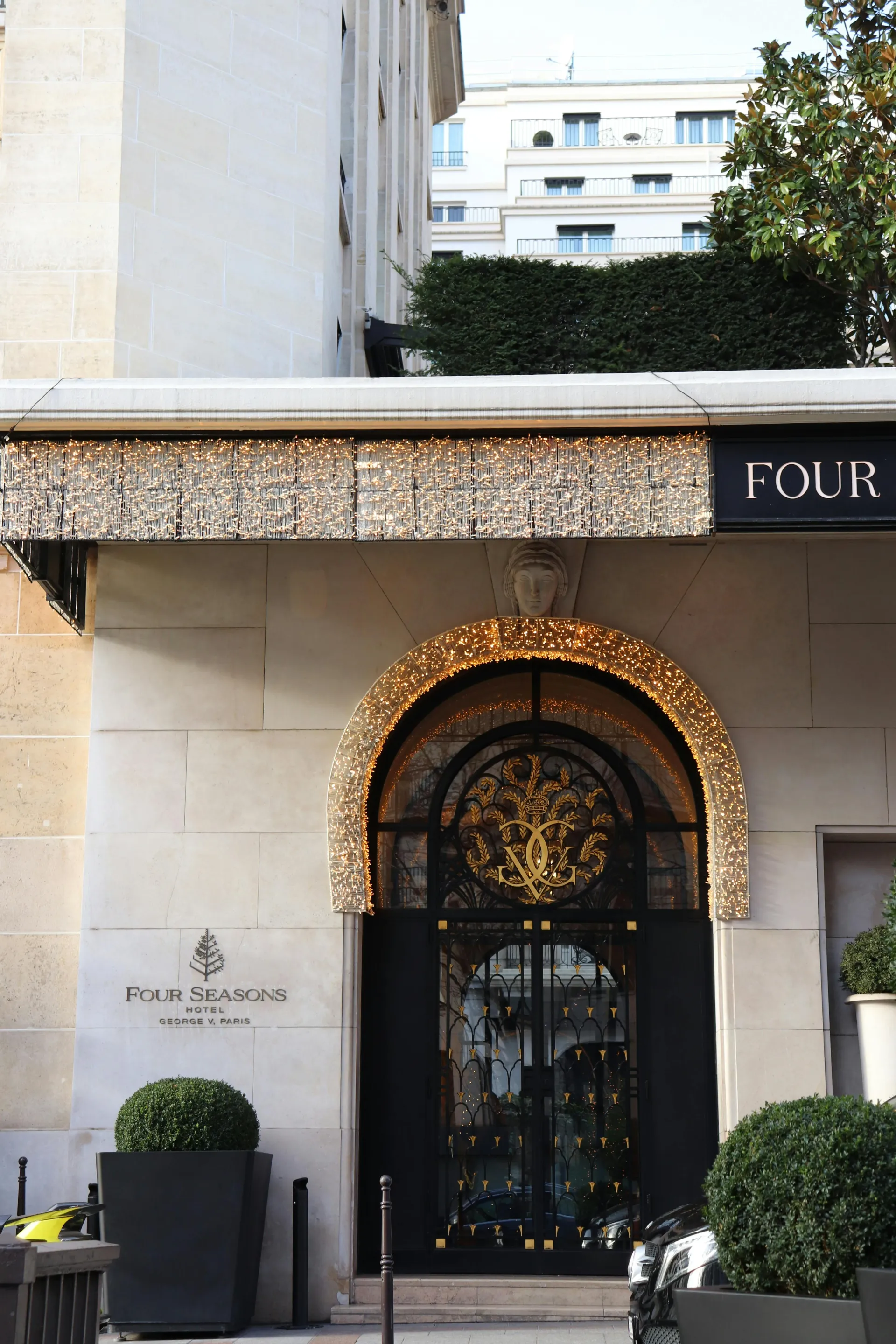
Why Do Luxury Hotels Feel So Good? The Subtle Science Behind the Experience
From scent, lighting, and texture to the way relaxation itself is carefully designed, luxury hotels know exactly how to turn a stay into an experience you want to repeat.
What Makes Luxury Hotels So Hard to Leave?
You walk into a luxury hotel and something shifts almost instantly. You breathe differently. You lower your voice. You slow down. It feels as if the outside world stays at the door, together with the notifications, the noise, and the endless list of things waiting to be done. It is not magic. And it is not just beautiful design. The best luxury hotels are built as complete experiences. They do not simply offer a room to sleep in, they create an environment that begins to shape your mood within minutes. The lighting, the scent, the silence, the texture of the sheets, the temperature, the music in the lobby, the pace of check-in, the way the space opens up in front of you, all of these details send your brain one powerful message: you can let your guard down here.High End hotels do not sell rooms. They sell states of mind.
In hospitality, true luxury is no longer only about marble, chandeliers, or oversized suites. It is about guest experience, the way every touchpoint is designed to create comfort, emotion, and memory. This is where sensory marketing becomes especially powerful: the careful use of the senses to build a coherent, memorable experience. In luxury hotels, this is done with remarkable subtlety. You never feel as though something is being “sold” to you. You simply feel that everything flows. Nothing jars you. Nothing feels accidental. The space seems to understand you before you have even started to analyze it.That is the difference between a beautiful hotel and one that stays with you. The first one looks good. The second one changes the way you feel.
Guest experience begins long before you reach your room
A truly refined luxury hotel understands that the experience does not start when you sit on the bed. It starts much earlier, from the moment you enter the lobby and notice that the pace has changed. Reception is rarely loud, the lighting is never harsh, the staff are attentive without being intrusive, and the space seems to invite you to slow down. Everything is designed to reduce friction, not just physical, but mental friction too. You do not have to “work” to understand the environment or adjust to it. The environment is already designed to receive you with ease.This is one of the great secrets of luxury hospitality: it makes sophistication feel effortless. In reality, that effortless feeling is the result of highly intentional guest experience design.
Hotel scent: the branding you cannot see, but always remember
You may forget a piece of furniture or the exact color of a curtain. But chances are you will remember how a hotel smelled if you felt exceptionally good there. Scent is one of the most direct routes to emotion and memory. That is why many luxury properties create their own signature fragrances. Woody, clean, floral, fresh, or softly vanilla notes can instantly create a sense of calm, safety, refinement, and order. Research on multisensory experiences in hospitality shows that sensory atmosphere can influence both satisfaction and the intention to revisit.This is what makes sensory marketing in luxury hospitality so fascinating: it works quietly. It does not make you think, “they chose a nice scent.” It makes you think, “I do not know what it is about this place, but I feel amazing here.” And in luxury, that is exactly the point. Not obvious impact but lasting emotion.
Good lighting does not just look beautiful. It changes your inner pace.
Premium hotels use lighting as an atmospheric tool, not merely a functional one. That is why, when you enter a well-designed luxury hotel, it rarely feels cold or exhausting. The lobby is often warm, elegant, almost cinematic. Corridors feel visually calm. Rooms tend to use layered lighting: one level for practicality, one for atmosphere, one for the softer mood of evening. Everything is designed so that the space can support different moods without ever feeling aggressive.It is the kind of detail many guests do not consciously analyze, but they feel it immediately. When lighting is done well, the body begins to believe it is safe to relax. And once again, that is one of the great strengths of luxury hospitality: it creates comfort not only visually, but physiologically.
Textures that say “you’re safe here” without words
Crisp sheets, thick towels, soft robes, heavy curtains, plush carpets. These things seem minor until one of them is missing. Then you realize just how much they contribute to the overall feeling of comfort. Luxury is also tactile. It is not only about what you see, but what you feel against your skin. Soft, carefully chosen textures communicate protection, care, and ease. They reinforce the same story told by scent and lighting: you do not need to stay on alert here.In the best hotels, guest experience is genuinely multisensory. It does not rely on one dramatic wow-factor. It depends on the coherence of every sensation. And that coherence is exactly what makes the experience feel complete.
Elegant minimalism gives the mind a rest
Another thing luxury hotels do exceptionally well is remove excess. Spaces are not cluttered, chaotic, or visually demanding. Even when the design is rich, it is controlled. Why does that matter? Because the mind tires quickly in overstimulating environments. When a room feels orderly, airy, and coherent, rest begins faster. You are no longer processing endlessly. You are no longer bombarded by stimuli. You do not feel the need to “decode” the space. Sometimes, true luxury is not what gets added. It is what gets taken away.
Luxury hotels offer something rare: novelty without stress
The ideal holiday has a delicate balance. You want something new, different from everyday life. But you do not want confusion, discomfort, or the feeling that you need to work hard to adapt. This is where great hotels excel. They offer exactly that combination: novelty without uncertainty. The space feels different from home and work, which creates that mental reset we seek when we travel. At the same time, it is organised so well that you feel safe almost immediately.In tourism research, the relationship between novelty, satisfaction, and loyalty suggests that people are not simply looking for surprise , they also want a degree of psychological familiarity. In other words, we like to discover. But we also like to feel we are in good hands. Luxury hotels are exceptionally good at delivering both at once.
Why some hotels stay with us long after check-out
Because a great experience is not only seen. It is emotionally recorded. When a hotel manages to connect scent, lighting, music, design, comfort, and service into one coherent story, it no longer remains in your memory as simply “a nice place.” It becomes a feeling you want to return to. That helps explain why luxury hotels invest so heavily in consistency. The same ambient scent. The same tone of service. The same calm rhythm. The same sense of a space that asks nothing from you, but gives. When those elements are repeated coherently, something extremely valuable begins to form: attachment. And from that point on, loyalty is no longer just about a brand. It is about how that place made you feel.
Why we always think: maybe one more night
Because a well-designed luxury hotel reduces noise and increases reward. It gives you what everyday life often lacks most: clarity, calm, beauty, care, comfort, and the feeling that everything is under control without you having to control anything. It is not just a good bed. Not just a beautiful lobby. Not just an elegant scent.Ali, F., Kim, W. G., Li, J., & Jeon, H. M. (2023). Multisensory experiences in hospitality and their influence on customer satisfaction and revisit intention. Frontiers in Psychology. https://pmc.ncbi.nlm.nih.gov/articles/PMC9807035/
Assaker, G., Vinzi, V. E., & O’Connor, P. (2011). Novelty seeking, satisfaction and destination loyalty in tourism behavior. Tourism Management. https://scholarworks.umass.edu/server/api/core/bitstreams/1a45a572-f143-4fa4-8a27-4a8845dc9d28/content